
Abstract
This article explores the use of university libraries and archives (including map libraries, photographic collections, and rare documents) as critical pedagogical tools for teaching Asian Studies. It argues that hands-on engagement with archival materials enables students to interrogate how knowledge about Asia has been historically constructed through imperial, colonial, and institutional frameworks. Drawing on teaching experiences at the University of Colorado Boulder, the paper details three integrated classroom practices: a cartographic analysis of Asian maps, visual thinking strategies applied to colonial-era photographs, and creative remix projects rooted in critical fabulation. These practices invite students to examine the ideological framing of archival materials, question dominant narratives, and develop epistemic humility through experiential learning. Emphasizing archives as sites of knowledge production, the article demonstrates how archival pedagogy fosters deeper student understanding of Asia’s heterogeneity and encourages reflexive, critical learning by students.
Keywords
Teaching and Learning, Archives, Re-storying, Orphan Images, Libraries, Maps
Introduction
Special thanks to CU Boulder Library Instructor Sean Babbs, Map Curator Naomi Heiser, Map Library Program Manager Ilene Raynes, the CU Boulder Center for Humanities, and CU Boulder Center for Teaching and Learning, whose collaboration, identification of relevant materials, and partnership co-created this project and the student learning experiences described here.
Following the profound impact of Edward Said’s Orientalism (Said 1979), much discussion has taken place on the pedagogy of Asian Studies. As the discipline tries to look at itself, examining the military and political urgency that culminated in the rapid growth of Asian Studies in the US post-WWII (Ludden 2000; Szanton 2004) as well as uneven relations of power within the field (Bridges, Sharma, and Sterling 2022; Spivak 1988; Chakrabarty 2000; Attewell 2023), for example, a number of key critiques have emerged. We, as practitioners of Asian Studies, have registered that the American discipline constructed “Asia” as a unified concept that reveals more about Western anxieties, desires, and projections than about the region’s diverse and complex realities. At the same time, the practice of teaching Asian Studies continues to require the delivery of deeper historical and political awareness, alongside careful and sophisticated knowledge about Asia.
This paper stems from reflections on this need, focusing on a method that I use in my teaching of Asian Studies at the University of Colorado, Boulder, namely the active use of university archives, from map libraries to photographic collections. Based on my experience, I propose that visual examination and analysis of archival materials, not necessarily curated for the purpose of teaching Asian Studies, yet available, and perhaps scattered across diverse locations on campus, can offer a powerful pedagogical tool for transforming student learning about Asia. Such materials help students understand and critique how knowledge about Asian societies has been historically constructed (Stoler 2010; Wang 2011).
As a teacher, I have experienced firsthand that university archives can serve as powerful pedagogical tools for transforming how students learn about Asia. By engaging directly with archival materials, students are able to see right in front of their eyes how knowledge has been historically constructed, doing this work themselves rather than reading about it in a text. This process involves unpacking the legacy of Orientalism: Western production of knowledge about the Orient (Asia) as the exotic Other. It also requires recognizing that archives are not serendipitous storehouses but are themselves shaped by histories of power and contemporary understandings. Through hands-on examination of maps, photographs, and other archival materials, students observe how colonial power structures shaped the collection, preservation, and interpretation of these materials (Chen 2021; Fan 2016; Anderson 1991). In doing this, they (I hope) open themselves up to alternative renderings of knowledge production, leading them to challenge the authority of textbook-driven narratives and recognize that knowledge is not fixed, but historically and personally constructed, politically situated, and open to reinterpretation.
University libraries and archives across the U.S. typically house maps, photographs, documents, and other materials that, upon examination, reveal the biases, assumptions, and power dynamics of the era in which they were created as well as the biases and orientations we bring to them today. I have found that by engaging with these primary sources both tactilely—through their hands, eyes, and even their noses—as well as with their minds, students are better able to think about and discuss how generalized knowledge of Asia has been shaped by these dynamics, and to consider whether this has influenced their own understandings (or not). These archival materials are not neutral; they are imbued with the ideologies and power relations of their creators (Duara 2018). For students, the challenge lies in recontextualizing these documents, critically engaging with their colonial legacies, and using them to deepen their understanding of Asia’s multifaceted histories and heterogeneity.
To do this, in my classes, my students and I explore many different types of archival sources that are available on my campus, many of which bear the imprint of imperial and colonial agendas. For example, maps show borders within India drawn by British colonial administrators without regard for local understandings of space and territory (Rapkin 1851). Similarly, photographs frame local Asian subjects using specific techniques to “otherize” and exoticize them, creating images that emphasize perceived differences between people. But these images are not objective or self-evident records. Photographers staged artificial scenes, posed subjects next to religious artifacts or cultural objects in unnatural ways, and captured supposedly “traditional” activities that often misrepresented daily life (Parak 2023). So, my students and I try to decipher what arrangement was made in the case of each particular photograph or artistic rendition. Many of these images strip away contextual complexity, presenting individuals as generic “types” instead of as people with distinct identities and lived experiences (Dieulefils 1900). For instance, a typical early 1900s photograph might show a Buddhist monk posed artificially in front of a temple, with a caption reducing complex religious practices to simple stereotypes. Alternatively, it might show workers in rice fields arranged to appear picturesque, rather than in a manner reflecting the true conditions of their labor. Some portray nature as idyllic and uninhabited, erasing the presence of local communities, despite the reality of these locations being home to many people (Junge 2008).
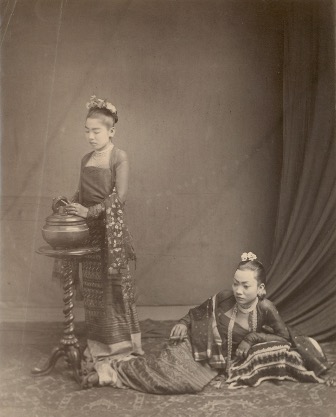
Figure 1. Photographer Unknown, Burmese Ladies of Wealth (ca. 1885–1895). [Photograph]. University of Colorado Boulder Libraries, Rare Books Collection. https://cudl.colorado.edu/luna/servlet/detail/CUB~34~34~162~1227023:Burmese-Ladies-of-Wealth
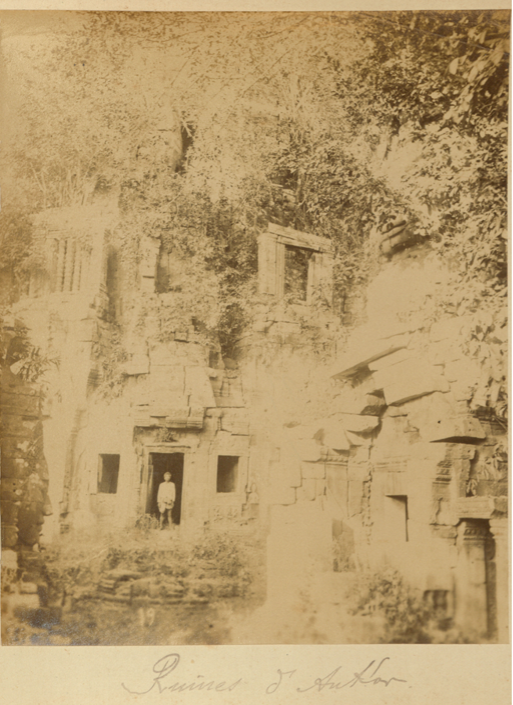
Figure 2. Photographer Unknown, Ruins of Angkor (ca. 1890–1900) [Photograph]. From Photograph album of southern Vietnam and Ho Chi Minh City, University of Colorado Boulder Libraries, Rare Books Collection. https://cudl.colorado.edu/luna/servlet/detail/CUB~34~34~153~1227002:Photograph-album-of-colonial-French?qvq=q%3Aindochina%3Blc%3ACUB%7E34%7E34&mi=0&trs=1&cic=CUB%7E34%7E34
Even though archival materials related to Asia can be limited in some U.S. college libraries, at University of Colorado, Boulder, our university library still allows us to examine how imperial dynamics unfolded both within and beyond Asia particularly in the context of Japanese colonial rule over Manchuria, Korea, and Taiwan. Photographs from this period frequently showcase Japanese modernity in contrast with the lives of people living under Japanese occupation. In our university library, we encounter photographs from 1920 to 1939 taken by unknown photographers (Author, unknown 1920 and Author, unknown 1932-1939). Although these images are curated alongside materials unrelated to Asian Studies, the process of locating them on campus becomes a learning experience. It prompts students to reflect not only on the images themselves but also on how what is in the picture is represented, framed, and associated with other topics and ways of knowing.
Another instructive example on my campus is the case of the Siamese royal court, as seen through the lens of European photographers like Robert Lenz, who was hired by the court (Lenz 1894). His images offer insight into how Asian elites participated in, and sometimes strategically employed, colonial forms of representation. Unlike most of Southeast Asia, Siam was never fully colonized, but its rulers actively engaged with Western technology and aesthetics in order to project an image of a modern nation. A fascinating case is that of King Chulalongkorn (Rama V), who in the late 19th century hired European photographers such as Robert Lenz to document his court and country. Going forward, this analysis could be expanded through case studies of intra-Asian and transnational movements. For example, by examining Sun Yat-sen’s cross-Pacific activities between Hawai’i and China, the formation of Russian émigré communities in Manchurian cities such as Harbin, or early Indian migration across Asia—all of which are documented in various archives and digital collections available to students on my campus.
When we view archives as bridges for teaching about Asia, we create an opportunity to leverage these primary source materials for deeper, more critical engagement by students and ourselves. The approaches I describe below invite students to: 1) examine how knowledge about Asia has been shaped by historical and colonial forces; 2) uncover the biases and power dynamics embedded in archival materials; 3) critically evaluate how these historical patterns continue to influence contemporary scholarship on Asia; and 4) challenge dominant narratives by questioning sources and considering alternative perspectives. In doing so, I hope that students not only gain a richer understanding of Asia but also develop essential skills for thinking critically about the ways in which knowledge is constructed and transmitted, including their own.
How do students come to know “Asia”?
Students do not enter as blank slates into our classrooms; they bring diverse relationships to Asia(s) that shape how they engage with course material—relationships that are familial, cultural, and embodied. For example, one student might be a third-generation Asian diaspora student carrying family stories and traditions, while another might have no familial ties but have developed an interest through pop culture or study abroad. Each of these relationships provides a distinct lens through which the student engages with Asia and the course content. These relationships represent forms of funds of knowledge that students carry with them (González, Moll, and Amanti 2005). At the same time, U.S. K-12 curricula often offer only fragmented or overly narrow representations of the region, significantly shaping their academic frameworks (Rodríguez and Kim 2019). Teachers (and schools) are constrained by limited resources, standardized testing pressures, and a tendency to focus on a narrow set of familiar topics, leading to partial and uneven representations that obscure Asia’s heterogeneity (Rodríguez and Kim 2019; Kim, 2025).
K-12 teachers face significant structural constraints when covering a region that is home to two-thirds of the world’s population. These include rigid state standards, limited instructional time, and overwhelming curriculum demands. These challenges are further compounded by recent waves of book bans and curriculum politicization, which disproportionately affect the teaching of non-Western histories and cultures (Lowen 1995; Nguyen 2022). Textbooks often offer only cursory, Eurocentric portrayals of Asia in world history, social studies, and geography courses, reducing this diverse and complex region to a monolithic entity. Despite these obstacles, many educators actively work to enhance their knowledge as well as their pedagogical approaches to teaching about Asia. They are supported by organizations such as the National Consortium for Teaching About Asia (NCTA), the National Endowment for the Humanities (NEH), and the Choices Curriculum program, which offer crucial professional development and nuanced instructional materials that help educators transcend simplified, stereotypical narratives[1]. But the reality is that these opportunities are not evenly provided. Many teachers and schools, even when they want to teach more about Asia, still lack the necessary resources.
These systemic educational limitations significantly influence how students engage with Asian Studies at the university level. Simultaneously, universities today serve increasingly diverse student populations, challenging outdated notions of a monolithic “Western” student body. In the United States, for instance, more than 47% of college students identified as non-white in 2022-2023. This diversity is further enriched by the presence of international students, who, despite the chilling effects of Trump-era policies aimed at discouraging their participation, represented more than 5% of all U.S. higher education enrollments in 2022-2023 (Hanson 2025). Our campuses now bring together students from myriad national, ethnic, and cultural backgrounds, including domestic students of diverse racial, ethnic, and economic backgrounds, diaspora communities, and international students from around the globe. Each student brings unique socio-cultural experiences, often shaped by global migrations and transnational networks.
Asian Studies has evolved significantly over time, transforming from its origins as a geopolitically motivated field into a more vibrant, multidisciplinary discipline emphasizing comparative intra-Asian frameworks (for example, comparing colonialism in Korea under Japan with colonialism in India under Britain) or regional analysis (studying the Sinophone world as a cultural sphere spanning multiple countries). Still, when students commence my introductory 2000-level course Gateway to Modern Asia, many encounter for the first time the concept that “Asia” itself is fundamentally a European geographical and conceptual invention (Lewis and Wigen 1997; Duara 2021). As an educator, my aim is to help students recognize that this binary oppositional logic, East vs. West, which is still perpetuated by popular media, mainstream discourse, and even study abroad marketing, is a construction that falsely positions Western culture as fundamentally different and separate from, or even superior to, that of Asia, or implies that Asia is somehow homogeneous and that all Asians are alike.
While traditional pedagogical approaches such as lectures and assessments have their place, I have found that experiential learning proves the most transformative. This is especially the case once we establish the understanding, following Said (1979), that the practice of looking at Asia as the West’s “other” is a product of centuries of colonial rule and imperial dominance.
How to Engage Critically with Archives?
When students actively engage with primary sources and participate in hands-on analysis, they not only retain complex theoretical concepts more effectively but also develop a deeper, more personal understanding of how frameworks have shaped contemporary representations of Asia. These interactive approaches create learning moments which foster genuine critical engagement with ideas we explore in class. In this section, I outline three pedagogical projects that integrate archival materials into my courses, inviting students into a critical examination of Asia and the broader structures through which it has been represented, studied, and understood. These are embedded in my introductory course, as well as in an upper-level seminar in Asian Studies. In each, I pay particular attention to how teaching Asia(s) demands sustained reflection from our varied positions as differently embodied, situated, learned, and resourced subjects (Chen, Attewell, Malik, Ludden, Jin, and Chiang 2023).
In my teaching, just as importantly, I aim to empower students as creators of knowledge themselves, encouraging them to imagine new ways of seeing and relating to the past while also foregrounding the ethical challenges of speaking about and for others, particularly those rendered voiceless by the archival record. I also want to be careful about encouraging students not to ventriloquize for others (as often happens in classrooms) and examine their own analysis as producers of knowledge. Needless to say, this isn’t always successful, but it is a goal. Also in my classes, tapping into digital humanities tools, I provide students with the resources to transform their research into public-facing digital exhibitions that reflect their insights on these topics. These projects engage directly with the archives and create interpretive projects that highlight alternative perspectives, including speculative and reparative approaches (Yale 2022). Drawing on Saidiya Hartman’s concept of critical fabulation (2008), students are encouraged to “speak back” to the archive, challenging the authority of official records and constructing narratives that reveal what has been omitted or suppressed.
While these classroom experiences can be transformative, it is often difficult for students to move beyond surface-level engagement or avoid inadvertently reinforcing the very hierarchies they are tasked with critiquing. Nevertheless, I remain convinced that critical archival pedagogy opens powerful avenues for students to develop a deeper sense of historical responsibility, epistemic humility, and creative potential in how they engage with both the past and the present, as I shall further explain below.
A. Map Library: Cartographic Constructions of Asia
During the fourth week of my 2000-level undergraduate course Gateway to Modern Asia, a survey class of the modern history of South, Southeast, and East Asia (forty students), I take my students to the campus Earth Sciences Map Library, which houses over 200,000 physical maps. This collection contains a wide range of cartographic materials about Asia, from National Geographic magazine maps from the past seventy years to replicas of 16th-century European world maps to original pen-and-ink renditions of Japanese spiritual pilgrimage routes.
Working closely with the university map librarians, I organize the visit around four thematic stations: landforms in Asia, shifting borders and the nation-state, indigenous mapping conventions, and regional diversity and connections. The maps at each station (pre-selected with the help of the librarians) reveal how cartography served multiple purposes beyond navigation, from imperial control and border demarcation to the categorization of resources, infrastructure, and military movements during World War II. Prior to the visit to the map library, we explore relevant concepts by drawing on readings from Thongchai Winichakul’s Siam Mapped: A History of the Geo-Body of a Nation (1997) and Lewis and Wigen’s The Myth of Continents: A Critique of Metageography (1997). My students are thus able to make connections with critical concepts and the maps themselves. Working in pairs to explore the stations, students analyze how national and regional boundaries were imagined and contested over time. This exercise prompts critical questions: Who created these maps? What were their motivations? What assumptions about Asia are embedded in these cartographic projects?
This library visit serves two pedagogical purposes. First and self-evidently, it disrupts our traditional classroom dynamics by moving us into a more intimate space. Second, it allows students to physically engage with historical artifacts that challenge their understanding of Asia. The impact of this approach is reflected in Student 1’s reflection:
Going to the maps library was an awesome experience, especially when it came to learning about historical maps and what the political and social views were like when the map was made. It was awesome to see how maps not only depict geography but also reflect the cultural attitudes of that time.
B. Photography Archive: Analyzing Colonial Photographs of Asia
Midway through the semester, in my Gateway class, following our discussions of imperialism and colonialism, students engage with constructions of Asia through the University of Colorado Boulder Library’s extensive photographic archive. This collection comprises photography books, prints, and orphaned images from the 1850s through the1950s, primarily sourced from the personal albums of European, American, and Japanese travelers. The photographs present staged, exoticized representations of local peoples, with landscapes framed in ways that emphasize natural beauty, industry, or the potential for resource extraction. The collection that we use came to the library through a large bequest focused on the history of photography of over seventeen thousand items in the early 2000s and are not cataloged within the university’s Asian Studies collection. Many are what Phu (2019) terms “orphan images” – photographs separated from their original context and provenance, marked by “an irretrievable sense of loss, particularly when it comes to contextualizing information.” As these personal mementos enter university archives, they transform into academic resources that students can analyze on multiple levels: Their production (encoding/writing), consumption (decoding/reading), and content (text).
For this activity, students engage with carefully selected collections of images in the Rare and Distinctive Collections reading room, where we set up five stations featuring a range of original photographs from colonial-era Asia. These include images from Samuel Bourne’s 1863 and 1866 expedition photographs of Kashmir to portraits of Bangkok by Robert Lenz, personal travel albums documenting Philippines cruises by an unknown American tourist, and hand-colorized images of 1880s and 1890s Japan. Before examining these materials, we discuss the stark contrast between photography’s ubiquity today, thanks to digital technology and satellites – where anyone with a cellphone can document as much or as little of their daily life as they choose and share it almost instantly with anyone in the world – and the limited visual records that existed when photography first became possible.
As photographic technology proliferated across the globe, colonial governments deployed it as a means of cataloging and controlling groups of people, most notably to categorize different ethnic and social groups, an endeavor which is also tied to the rise of scientific racism. Publications such as National Geographic and Life Magazine further amplified these colonial perspectives with photographic coverage typically emphasizing the “exotic” and “primitive” aspects of non-Western cultures while simultaneously highlighting Western technological superiority and the supposed benefits of colonial interventions (Lutz and Collins 1993). The images of non-Western peoples and cultures, presented under the guise of scientific documentation and cultural education, helped to normalize colonial power relations and validate imperial expansion, and were crafted for the leisurely or intellectual consumption of middle-class Western audiences. As such, the history of photography is closely linked with colonial expansion in Asia, serving as both medium of documentation and instrument of imperial power (Parak 2023). Colonial states and western travelers systematically used photography to categorize and produce knowledge that justified occupation and constructed notions of cultural inferiority, ideas that became entrenched in academic discourse (Tai 2021). Today, many of these original images reside in North American academic libraries, far removed from their origins. While these collections serve as valuable teaching resources, their use demands a decolonial archival approach (Ghaddar and Caswell 2019) that acknowledges Orientalism’s persistent influence. The students in my Gateway class engage with such aspects of history of colonial photography prior to their visit to the photographic collection.
In our library session, we use Visual Thinking Strategies (VTS) and deep looking practices to collectively examine colonial-era photographs (Yenawine 2013). This process begins with open-ended observations, guided by questions such as “What’s going on in this picture?” and “What do you see that makes you say that?” Rooted in art education methodology, this approach encourages sustained engagement with visual materials and helps reveal layers of meaning that might be missed in cursory viewing (Nelson 2017). Students are also asked to identify recurring patterns in the representation of local people, the framing of landscapes, and the positioning of subjects within the photographic space. Drawing on Rose’s (2016) framework of critical visual methodology, they analyze three key dimensions of each image: the site of production (including the photographer’s intent and historical context), the image itself (its formal and compositional elements), and its sites of circulation and display, through which it may have acquired meaning over time.
This deep looking practice reveals not just what is depicted, but crucially, what has been excluded or strategically framed out of view (Edwards 2016). Students learn to recognize significant absences: the missing perspectives of local people, a lack of contextual information about photographed subjects, and the broader conditions of colonial occupation that remain outside the frame. Physical engagement with these historical materials provides tangible evidence of the ideas we have been exploring in class, as can be seen in Student 2’s reflection, demonstrating engagement with archival temporality:
As a history major I often wonder if people from things like the 1880’s album of water-colored Japanese photos ever imagined that they would survive so far into the future and be stowed away in a place so far from where they originated. I also like it because it’s quite eerie, many of the photos have no information attached to them beyond the year in which they were taken, as such we don’t know the names of these people and can only see their faces, and anyone who did once know them is now long gone and usually forgotten.
Student 3’s reflection captures understanding of how historical narratives are shaped by perspective:
Key ideas I remember are that history has been and will continue to be skewed according to the person behind the lens. However, there is also power behind historical pictures and documentaries because it also can show differing perspectives and can uncover some uncomfortable truths about the realities of war and such.
Student 4 offers a detailed analysis of how colonial presence manifested in Asian seaports and how Western tourists positioned themselves as “conquerors” in landscape photographs:
After being exposed to the power and narratives that photographs can convey, I learned how they can be used to promote or justify colonial practices.
This student also observed that these could lead viewers to “view colonialism as a positive practice.”
C. Multidisciplinary Approaches: Re-Mix, Reimagine, Reframe
The final way in which I use the university archives is for an upper division seminar called Politics of Memory and Heritage in Asia. In this class, I ask students to engage in the creative transformation of photographs or maps of Asia through a project that asks them to “re-mix, reimagine, or reframe” an object they have selected (Northeastern University 2023). They are encouraged to recontextualize the visual objects through various creative interventions including combining elements, manipulating imagery, or situating them in new contexts.
Drawing on Saidiya Hartman’s method of critical fabulation (2008), students are challenged to “speak back” to the archive by combining historical research with narrative writing that questions and reframes the original presentation of a selected artifact. While we primarily focus on colonial-era materials, students may choose images from other periods that hold personal or cultural significance. At this stage, I introduce students to digital humanities practices. Their final project culminates in a collaborative, curated website featuring analyzed artifacts alongside student-authored interpretive essays. These websites are publicly accessible, giving students firsthand experience in reaching out to the general population and transferring their classroom knowledge into products that have public impact. Through this process of research, analysis, and creative reinterpretation, students confront fundamental questions about authenticity, representation, and the politics of memory, key themes that thread the course. In doing so, their relationship to Asia is reconfigured, and they are introduced into new roles as public-faced presenters and curators of their knowledge on Asia.
To introduce the assignment, we begin with a “re-mix” activity analyzing Samuel Bourne’s accounts of his 1866 Kashmir expedition, published in the British Journal of Photography in 1866. Bourne, a prominent British photographer, conducted extensive photographic tours across India, succeeding in documenting its landscapes despite the unwieldiness of the era’s photographic equipment. His expeditions relied heavily on underpaid local laborers, who carried his equipment and materials through challenging terrain. Bourne’s written accounts reveal a complex imperial perspective that alternates between expressing contempt for the local people and viewing the landscape through a religious lens—interpreting India’s natural grandeur as evidence of divine power and Christian providence. This dual perspective of dismissing local inhabitants while romanticizing their land was typical of colonial photography and writing of the period. Bourne’s work exemplifies how colonial photographers, while producing technically impressive images, reinforced racist and dismissive attitudes toward local people through both their photographs and their written accounts (Bourne 1866).
As an introduction to the re-mix assignment, students analyze Bourne’s accounts by highlighting phrases that reveal his perspective on race, culture, and the people he encounters. They identify where his language feels particularly colonial, stereotypical, or dismissive, as well as moments where his gaze on Kashmir is aestheticized or exoticized. Using scissors, markers, paper, and tape provided in class, students then cut up the text, rearrange, or remove parts to create a “new” narrative or poem. They can focus on either: 1) exposing Bourne’s biases and the colonial agenda in the text; 2) imagining a counter-narrative, giving voice to those silenced in the original piece (e.g., the people of Kashmir or the land itself); or 3) juxtaposing the descriptions of place with words that challenge or contradict them.
At the end of this class, we do a gallery walk in which students share their re-mixes with one another. This initial exercise prepares students for their longer research project by introducing key analytical skills and giving them an opportunity to practice for this kind of experimental research project, which is very different from more traditional academic paper-writing. As part of the assignment, students are required to document their creative and interpretive decisions, reflecting on how their chosen artifacts both produce and challenge historical knowledge. This meta-analytical exercise illuminates how archival practices—through acts of preservation, transformation, curation, and omission—shape historical narratives. Through hands-on manipulation of archival materials, students experience firsthand how meaning shifts based on perspective and context or sometimes through the simple transposition of concepts or events. The digital humanity component, in which students are required to produce public-facing curation, adds layers of complexity to their analysis: How does digitization affect the materiality and meaning of historical artifacts? What ethical responsibility should be considered when reaching out to the general public, creating an open-access website? What new possibilities and limitations emerge when working with digital surrogates? Student 5 reflects on the project as follows:
When I remixed Bourne’s Text, I also found it interesting how through his words, you could create the perspective of the laborers and how if you really focused on what he’s saying you could turn his words into many different things. I decided to remix his text by cutting out particular words and making it a counter perspective of the laborers. It made me really see through their perspectives and how they would have reacted to Bourne through his words.
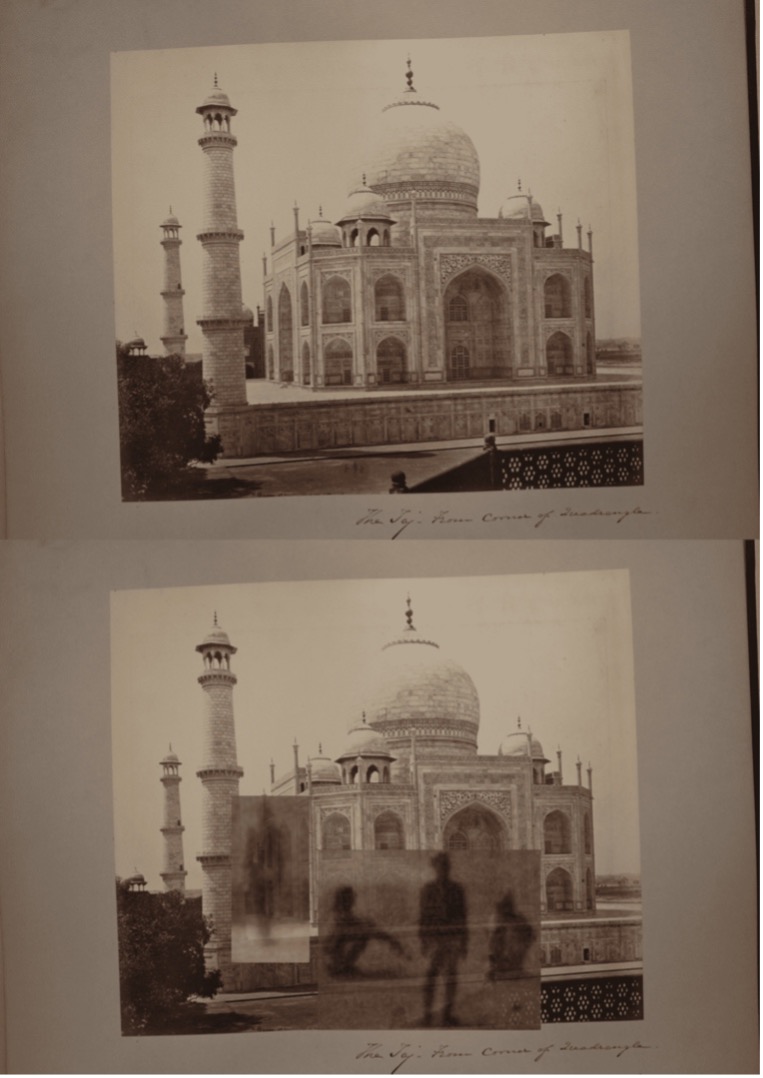
Figure 3. Focusing People Not Objects (2025), by S. Koirala. In S. Koirala, Photography and Selective Narratives in Colonial India, Colorado Journal of Asian Studies, 12(1). https://journals.colorado.edu/index.php/coasianstudies/article/view/3535
Conclusion: Archives and the Power to Shape Knowledge of Asia
Archives don’t simply store knowledge; they actively produce it. As centers of calculation, they gather, organize, and transform diverse materials into authoritative knowledge, functioning as epistemic gatekeepers that determine how information is categorized, preserved, and disseminated (Foucault 1969; Latour 1987). The materials within these collections – maps, photographs, and texts – are not neutral objects; they are carriers of ideologies, power structures, and historical contexts. They are what Appadurai (2003) terms “archives of knowledge,” where colonial relationships persist through collection practices and classification systems. Through these encounters, archives are revealed not merely as repositories of history, but as sites that are active in its construction. My Asian Studies students experience this firsthand, seeing how archives are both reflective and constitutive elements of history. This process helps them recognize their own roles in the ongoing production of knowledge about Asia.
In Asian Studies, archival power extends far beyond the mere preservation of documents, fundamentally shaping how Asia is constructed as a category and how knowledge about the region is organized and understood. In Asia as Method (2010), Kuan-Hsing Chen demonstrates how the very concept of “Asia” has been historically crafted and continually redefined through cartography, colonial records, and scholarly discourse. These tools serve not only to map physical geography but to establish cultural and political boundaries that frequently reflect the perspectives and interests of dominant powers. Linda Tuhiwai Smith’s Decolonizing Methodologies: Research and Indigenous Peoples (1999) reveals archival practices as exercises of power that simultaneously preserve certain truths while silencing others, effectively determining what knowledge becomes accessible and legitimized.
In my classroom in Boulder, Colorado, far removed geographically and often experientially from the Asian contexts we study, the challenge is to make distant histories and places tangible and meaningful. Archival materials help bridge this distance, providing physical and affective entry points into histories that are often otherwise perceived by students as abstract or disconnected. Despite the limitations of available materials and the archival silences they often reflect, I have found that hands-on work with archives offers a transformative pedagogical opportunity. As students examine maps, photographs, and documents with their own eyes and hands, the past feels more real.
As I continue, I aim to expand our archival inquiry to include discussions around acquisition practices, cataloging systems, and curatorial choices. Who decides what is included, how it is labeled, and what narratives are emphasized or omitted? By foregrounding these questions as well as critical questions about ourselves and what we bring to these spaces, I hope that students will see how knowledge is never neutral or fixed. I also hope that as their confidence in their own interpretive authority grows (alongside humility and reflexivity), they gain confidence in their own voice as scholars and interpreters of culture, where dominant narratives can be questioned and alternative histories uncovered.
Lauren Collins is Assistant Teaching Professor and Program Director of the undergraduate Asian Studies program at the University of Colorado Boulder. Her teaching and research focus on experiential learning, study abroad, and the pedagogical uses of visual and archival materials in the study of Asia. Her recent publications include Students as Partners in Faculty-Led Study Abroad: Teaching Taiwan in 2023 (Education About Asia, 2023) and Independent Cinema as a Lens on a Changing Cambodia: Using the Films of Anti-Archive in the Classroom (Education About Asia, 2022).
Bibliography
Anderson, Benedict. 1991. Imagined Communities: Reflections on the Origin and Spread of Nationalism. London: Verso.
Appadurai, Arjun. 2003. “Archive and Aspiration.” In Winy Maas, Arjun Appadurai, Joke Brouwer, and Conway Morris Simon, eds., Information is Alive: Art and Theory on Archiving and Retrieving Data. Rotterdam: NAi Publishers.
Attewell, Nancie. 2023. “Conversation, Collaboration, and the Work of Teaching Global Asia/s” (50/50 with Anushay Malik). Verge: Studies in Global Asias Vol. 9, No. 1, pp. 3-14.
Retrieving Data. Rotterdam: NAi Publishers.
Author, unknown, 1885-1895. Burmese Ladies of Wealth [Photograph]. (ca. 1885–1895). Norlin Library - Rare Books Collection. University of Colorado, Boulder.
Author, unknown. 1920. Photograph album of a Japanese family in Manchuria, colonial Korea, and Japan, 1920. University of Colorado Boulder Libraries, Rare Books Collection.
Author, unknown. 1932-1939. Photographs of Japanese-occupied Harbin and the surrounding area, 1932-1939. University of Colorado Boulder Libraries, Rare Books Collection.
Author, unknown. 1890-1900. Ruins of Angkor [Photograph]. (ca. 1890–1900). In Photograph album of southern Vietnam and Ho Chi Minh City, University of Colorado Boulder Libraries, Rare Books Collection.
Bourne, Samuel (1866-1867), ‘Narrative of a photographic trip to Kashmir (Cashmere) and adjacent districts,’ ‘The British Journal of Photography,’ vol. XIII, no. 335, 5 October, no. 337, 19 October, no. 339, 2 November, no. 342, 23 November, no. 344, 7 December, no. 347, 28 December, vol. XIV, no. 348, 4 January, no. 351, 25 January and no. 358, 8 February.
Bridges, Will, Sharma, Nitasha Tamar, and Sterling, Marvin,. Eds. 2022. Who Is the Asianist? The Politics of Representation in Asian Studies. New York: Columbia University Press.
Chakrabarty, Dipesh. 2000. Provincializing Europe: Postcolonial Thought and Historical Difference. Princeton, NJ: Princeton University Press.
Chen, Kuan-Hsing. 2010. Asia as Method: Toward Deimperialization. Durham, NC: Duke University Press.
Chen, Tina. 2021. “Global Asias: Method, Architecture, Praxis,” Journal of Asian Studies Vol. 80, No. 4., pp. 997–1009.
Chen, Tina, Nadine Attewell, Anushay Malik, David Ludden, et al. 2023. “The Problems and Possibilities of Global Asias Pedagogy.” Verge: Studies in Global Asias 9, No. 1, pp. 1–42.
Dieulefils, Pierre. 1900. Tonkin Types: Photograph album, Between Circa 1900 and 1909. Norlin Library - Rare Books Collection. University of Colorado, Boulder.
Duara, Prasenjit. 2018. “Area Studies Scholarship of Asia.” In Matthias Middell ed., The Routledge Handbook of Transregional Studies. New York: Routledge.
Duara, Prasenjit. 2021. “Circulatory Histories of the Nation-State,” Verge: Studies in Global Asias Vol. 7 No. 1, pp. 5–12.
Edwards, Elizabeth. 2016. Photography, Anthropology and History: Expanding the Frame. New York: Routledge.
Fan, Fa-ti. 2016. “Modernity, Region, and Technoscience: One Small Cheer for Asia as Method,” Cultural Sociology Vol. 10, No. 3, pp. 352–68.
Foucault, Michel. 1969. The Archaeology of Knowledge. New York: Pantheon Books.
Ghaddar, J.J. and Caswell, Michael. 2019. “To Go Beyond: Towards a Decolonial Archival Praxis,” Archival Science Vol. 19, pp. 71–85.
González, Norma., Moll, Luis C., and Amanti, Cathy. Eds. 2005. Funds of Knowledge: Theorizing Practices in Households, Communities, and Classrooms. New York: Routledge.
Hanson, Melanie. 2025. “College Enrollment & Student Demographic Statistics,” Education Data Initiative. Online: https://educationdata.org/college-enrollment-statistics (Retrieved July 4, 2025).
Hartman, Saidiya. 2008. “Venus in Two Acts,” Small Axe Vo. 12, No. 2, pp. 1-14.
Junge, Sophie. 2018. “Old Soerabaja – New Soerabaja: Circulating the Emptiness of the Colonial City,” PhotoResearcher Vol. 30, pp. 48-62.
Kim, Yeji. 2025. “Connecting Everyday Lives to Classrooms: Asian American Teachers’ Transnational Funds of Identity and Teaching.” Educational Studies
Koirala, S. (2025). Photography and Selective Narratives in Colonial India. Colorado Journal of Asian Studies, 12(1). https://journals.colorado.edu/index.php/coasianstudies/article/view/35
Latour, Bruno. 1987. Science in Action: How to Follow Scientists and Engineers through Society. Cambridge, MA: Harvard University Press.
Lenz, Robert. 1894. Photographs of Bangkok, Thailand, 1894-1900 (14 leaves of albumen and gelatin silver prints). Norlin Library - Rare Books Collection. University of Colorado, Boulder.
Lewis, Martin W., and Wigen, Karen. 1997. The Myth of Continents: A Critique of Metageography. Berkeley, CA: University of California Press.
Lowen, James W. 1995. Lies My Teacher Told me: Everything Your American History Textbook Got Wrong. New York: The New Press.
Ludden, David. 2000. “Area Studies in the Age of Globalization,” Frontiers: The Interdisciplinary Journal of Study Abroad Vol. 6, pp. 1-22.
Lutz, Catherine A., and Collins, Jane L. 1993. Reading National Geographic. Chicago, IL: University of Chicago Press.
Nelson, Amelia. 2017. “Visual Thinking Strategies from the Museum to the Library: Using VTS and Art in Information Literacy Instruction,” Art Documentation: Journal of the Art Libraries Society of North America Vol. 36, No. 2, pp. 281–292.
Nguyen, Viet Thanh. 2022. “Book Banning and the Fight for Truth,” The New York Times January 29, 2022. Online: https://www.nytimes.com/2022/01/29/opinion/culture/book-banning-viet-thanh-nguyen.html
Northeastern University. 2023. “Decolonizing the Archive: Remix and Reassembly,” ECDA Early Caribbean Digital Archive. Online: https://ecda.northeastern.edu/home/about/decolonizing-the-archive/
Rapkin, John. 1851. British India [electronic resource]. In Illustrated atlas, and modern history of the world (A.H. Wray, Illustrator; G. Greatbach, Engraver). John Tallis & Co. Scanned by Cartography Associates. David Rumsey Collection. https://www.davidrumsey.com/
Rodríguez, Noreen Naseem, and Kim, Ester June. 2019. “Asian and American and Always Becoming: The (Mis)education of Two Asian American Teachers,” Oregon Journal of the Social Studies Vol. 7, No.1, pp. 67–81.
Parak, Gisela. 2023. “Seeing the ‘Other’? Pictorial Practices of a Colonial Appropriation of Space,” International Journal for History, Culture and Modernity Vol. 11, pp. 1-14.
Phu, Thy. 2018. “Photos Unhomed: Orphan Images and Militarized Visual Kinship,” Trans Asia Photography Vol. 9, No. 1. Online: https://read.dukeupress.edu/trans-asia-photography/article/doi/10.1215/215820251_9-1-108/312795/Photos-Unhomed-Orphan-Images-and-Militarized
Rose, Gillian. 2016. Visual Methodologies: An Introduction to Researching with Visual Materials. New York: SAGE Publications.
Rydell, Robert W. 1984. All the World’s a Fair: Visions of Empire at American International Expositions, 1876-1916. Chicago, IL: University of Chicago Press.
Said, Edward W. 1979. Orientalism. New York: Pantheon Books.
Smith, Linda Tuhiwai. 1999. Decolonizing Methodologies: Research and Indigenous Peoples. New York: Zed Books.
Spivak, Gayatri C. 1988. “Can the Subaltern Speak?” In Carey Nelson and Lawrence Grossberg eds, Marxism and the Interpretation of Culture. Urbana-Champaign, IL: University of Illinois Press.
Stoler, Ann. 2010. “Archival Dis-Ease: Thinking through Colonial Ontologies,” Communication and Critical/cultural Studies Vol. 7, No. 2, pp. 215–219.
Szanton, David L. Ed. 2004. The Politics of Knowledge: Area Studies and the Disciplines. Berkeley, CA: University of California Press.
Tai, Jessica. 2021. “Cultural Humility as a Framework for Anti-Oppressive Archival Description.” In Radical Empathy in Archival Practice, edited by Elvia Arroyo-Ramírez, Jasmine Jones, Shannon O’Neill, and Holly Smith. Special issue, Journal of Critical Library and Information Studies Vol. 3, No. 2, pp. 1-23.
Wagoner, P.B. (2003). Precolonial Intellectuals and the Production of Colonial Knowledge. Comparative Studies in Society and History Vol. 45, No. 4, pp. 783-814.
Wang, Hui. 2011. The Politics of Imagining Asia. Cambridge, MA: Harvard University Press.
Winichakul, Thongchai. 1994. Siam Mapped: A History of the Geo-body of a Nation. Honolulu, HI: University of Hawaii Press.
Yale Library Reparative Archival Description Working Group. 2022. https://guides.library.yale.edu/reparativearchivaldescription
Yenawine, Philip. 2013. Visual Thinking Strategies: Using Art to Deepen Learning across School Disciplines. Cambridge, MA: Harvard Education Press.
[1] It is important to note that, as of summer 2025, the Choices Program at Brown University had lost its funding and was no longer producing new materials. Additionally, during President Trump’s second term, federal support for initiatives such as this one has been significantly reduced, with National Endowment for the Humanities (NEH) funding for such programs facing severe cuts.

This work is licensed under a Creative Commons Attribution-NonCommercial-NoDerivatives 4.0 International License.
Copyright (c) 2025 Transnational Asia